
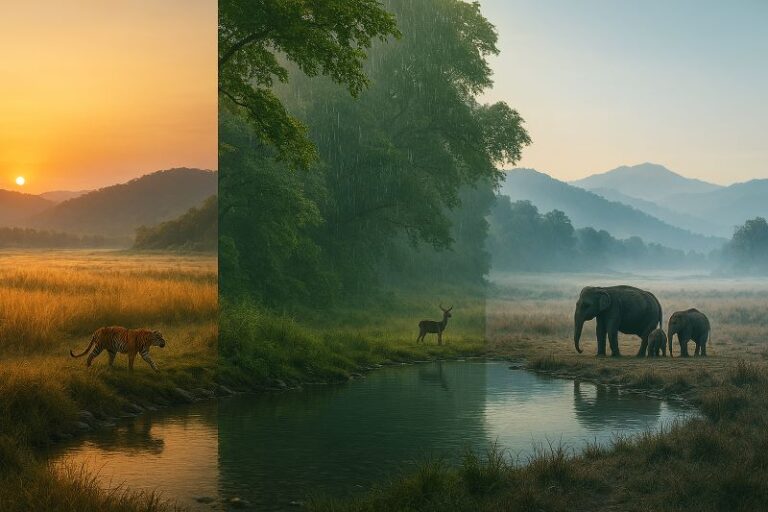
How summer, winter, and monsoon transform India’s oldest national park
Jim Corbett National Park India’s first and one of its most iconic wildlife sanctuaries is tucked away in the breath-taking Himalayan foothills of Uttarakhand. Known for its extraordinary biodiversity, dramatic landscapes, and thriving population of Bengal tigers, Corbett transforms in appearance, energy, and atmosphere with every passing season. From the sun‑drenched intensity of summer to the lush emerald tranquillity of the monsoon and the crisp, wildlife‑rich charm of winter, the park continuously changes its colours like a living canvas.
Understanding these seasonal shifts not only enhances your travel experience but also deepens your connection with the forest’s natural rhythm and cycles. Whether you’re a wildlife enthusiast, photographer, nature lover, or first‑time traveller, knowing how Corbett evolves throughout the year helps you appreciate its beauty on a deeper level.
Below is a detailed, season‑wise exploration of how Jim Corbett National Park transforms across the year crafted with a blend of factual insight and a storyteller’s touch, making it both informative and immersive.
Summer (March–June): The Forest in Raw, Golden Light
Summer in Jim Corbett National Park is hot, dry, and full of action this is the season when the forest shows its boldest and most dramatic side. Temperatures usually stay between 25°C and 40°C, but in some exposed areas, they can climb as high as 46°C. While the weather can be intense, it also creates some of the best wildlife‑viewing conditions of the entire year.
As the heat increases, the lush greenery of Corbett slowly transforms into a landscape of sun‑baked, golden browns. This drying of the forest plays a major role in wildlife movement. With water sources shrinking, animals follow predictable paths toward the few remaining watering holes, riverbanks, and seasonal streams. For travellers, this means higher chances of spotting tigers, elephants, deer, and many other species.
Summer is especially popular among wildlife photographers and safari lovers because the vegetation becomes thinner, making it easier to see animals without obstruction. During this season, morning and evening jeep safaris are the ideal time to explore temperatures are cooler, animals are more active, and the sunrise/sunset light creates magical, golden‑hour views perfect for photography.
Travelers can often witness unforgettable moments.
- Tigers relaxing in shallow pools
- Herds of elephants walking gracefully to the river
- Spotted deer feeding openly in grasslands
- Birds swooping down for quick water breaks
This combination of heat, golden landscapes, and concentrated wildlife activity makes summer a powerful and memorable time to experience Corbett.
Summer Mood in Corbett
- Hot and intense weather
- Excellent wildlife visibility around water sources
- Golden-toned landscapes ideal for photography
- A favourite season for wildlife enthusiasts and photographers
- Strong chances of tiger sightings
Monsoon (July–September): The Emerald Rebirth
When the monsoon clouds sweep across Jim Corbett National Park, the forest undergoes its most breath-taking transformation of the year. With the arrival of steady rainfall, Corbett turns into a lush, vibrant world of deep greens, fresh foliage, and shimmering rain-washed landscapes. The air fills with the earthy fragrance of Petrich or, streams swell with newly collected rainwater, and the forest hums with a calm, rejuvenated energy. During this season, temperatures remain pleasant, ranging from 22°C to 35°C, although the humidity often rises significantly.
However, the heavy rains also reshape the park’s accessibility. Many of Corbett’s core safari zones close temporarily because monsoon showers can cause track erosion, flooding, and terrain instability. This is a necessary safety measure to protect both visitors and wildlife. But monsoon travellers need not worry buffer zones like Jhirna, Dhela, and Phato remain open for safaris, offering an intimate and serene wildlife experience without the usual crowds.
While wildlife sightings may be lower during the monsoon since many animals seek shelter among thick vegetation the season has a different charm altogether. The park becomes quiet, slow, and deeply peaceful. For nature lovers, photographers, writers, wellness travellers, or anyone craving solitude, monsoon in Corbett is an unmatched experience. The emerald landscapes, gentle rains, and absence of peak-season rush create the perfect setting for reflection and rejuvenation.
Travelers visiting during this season can expect.
- Beautiful rain-washed forests ideal for landscape photography
- Cooler temperatures and refreshing greenery
- Fewer tourists, making safaris quieter and more personal
- Scenic drives with misty hills and flowing streams
- Relaxed stays at resorts that offer monsoon-friendly indoor/outdoor activities
Monsoon Mood in Corbett
- Deep green, rain‑washed forest
- Peaceful and slow-paced atmosphere
- Low wildlife visibility but high natural beauty
- A perfect season for quiet retreats and nature-focused travel
Winter (October–February): Crisp Air and Clear Sightings
Winter is widely regarded as the best time to visit Jim Corbett National Park, and for good reason. With temperatures ranging from a chilly 5°C in the early mornings to a pleasantly warm 30°C during the day, the season offers a perfect balance for wildlife viewing, outdoor activities, and comfortable travel.
As winter sets in, the forest gradually sheds the dense greenery left behind by the monsoon. What remains is a beautifully clean landscape crisp air, open views, soft winter sunlight, and bright blue skies. This clarity enhances every safari, allowing travellers to spot animals from a distance and enjoy the scenic charm of Corbett like never before.
With the warmth of the day encouraging animal movement, winter becomes prime time for tiger sightings. Elephants, deer, wild boar, and other mammals are frequently spotted along open grasslands and riverbanks. Bird watchers are especially rewarded migratory species arrive in large numbers, adding colour and sound to the forest.
Another big advantage for travellers is that all safari zones are open during winter, except for occasional early-season maintenance closures in October. This means visitors can explore popular regions like Dhikala, Bijrani, Dhela, Jhirna, Durga Devi, and more each offering unique landscapes and wildlife experiences.
Despite being peak season, winter mornings retain their magic. Mist floats above the grasslands, the Ramganga River sparkles under the pale winter sun, and the forest feels calm and unhurried. It’s an atmosphere that appeals to photographers, families, solo travellers, and anyone seeking the classic Corbett safari experience.
Why Travelers Love Winter in Corbett
- Best wildlife visibility, especially for tigers and migratory birds
- All safari zones open, offering maximum choice
- Ideal weather for outdoor activities, photography, and nature walks
- Clear skies & breath-taking morning mist, perfect for scenic drives
- Comfortable resort stays with bonfires, riverside views, and warm hospitality
Winter Mood in Corbett
- Clear and cool weather
- High wildlife activity and birdlife
- Misty, magical mornings
- Calm, scenic, and perfect for safaris
How Corbett Really Changes Its Colours
| Season | Landscape Colour Palette | Wildlife Activity | Safari Experience |
| Summer | Golden, dry, sunlit browns | Highest sightings near water | Hot but rewarding; best for tigers |
| Monsoon | Deep green, rain-washed | Low but serene | Limited zones open; quiet |
| Winter | Fresh greens + morning mist | High daytime activity | Cool, scenic, best for beginners |
Final Thoughts: A Forest That Teaches Seasons of Life
Jim Corbett National Park is far more than a wildlife destination it is a living, breathing ecosystem that teaches us something profound with every shift of season. Travelers who come here don’t just witness nature; they experience a quiet dialogue with the forest, one that stays with them long after they return home.
Each season carries its own wisdom.
- Summer teaches clarity and courage.
The heat strips the landscape down to its essentials, revealing raw beauty and unmatched wildlife sightings. It reminds us of resilience and the strength that comes from openness and simplicity. - Monsoon shows the beauty of rest and regeneration.
As the rains heal the land and revive every leaf, the forest invites travellers to slow down, breathe deeply, and appreciate renewal in its purest form. - Winter brings balance and harmony.
With clear skies, active wildlife, and crisp air, Corbett in winter feels perfectly aligned calm yet alive, peaceful yet thriving.
No matter when you visit, Corbett has a mood waiting for you a mood that mirrors the season and, often, something within yourself. Whether you seek adventure, silence, reflection, or a connection with the wild, this forest offers an experience that lingers in memory, echoing like birdsong long after the journey ends.






