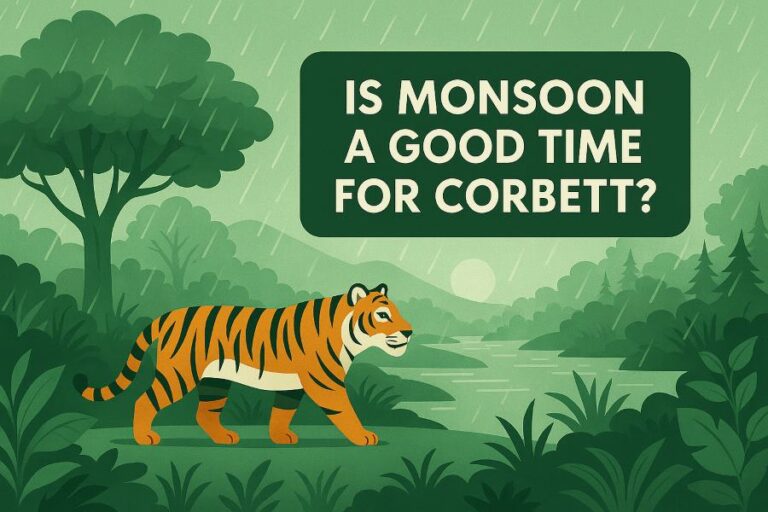
Planning a trip to Jim Corbett National Park during the monsoon and wondering if it’s the right decision? You’re definitely not alone. This is one question almost every traveller asks before booking their trip, especially when they hear about heavy rains, partial park closures, and unpredictable safari conditions.
It’s completely normal to feel confused.
On one hand, you might have seen beautiful images of lush green forests, misty mornings, and overflowing rivers which make Corbett look absolutely magical during the rainy season. On the other hand, you’ve probably also heard that many safari zones remain closed and that spotting wildlife, especially tigers, becomes more difficult.
So naturally, the question arises.
Is it really worth visiting Corbett during monsoon, or should you avoid it altogether?
Understanding the Reality of Monsoon in Corbett
The truth is monsoon in Corbett is completely different from summer and winter, not just in terms of weather, but in the overall experience.
Unlike winter, where the weather is comfortable and crowd-friendly, or summer, where wildlife sightings are at their peak, monsoon offers a slower, quieter, and more nature-focused experience. The forest undergoes a dramatic transformation during this time.
- Dry landscapes turn into dense, vibrant greenery
- Rivers and streams start flowing at full force
- The entire jungle feels fresh, alive, and untouched
At the same time, practical limitations come into play.
- Some of the most popular zones are closed for safety
- Safaris may be limited or affected by rainfall
- Wildlife sightings are less predictable due to dense vegetation
So, Is Monsoon a Good Time or Not?
Here’s the honest answer, it depends entirely on your expectations from the trip.
If you are visiting Corbett with a clear goal like spotting a tiger or experiencing multiple safari zones, monsoon may not fully meet your expectations.
But if your idea of a perfect trip involves.
- Sitting in a peaceful resort surrounded by nature
- Enjoying the sound of rain in the jungle
- Experiencing Corbett without crowds
- Capturing the beauty of lush green landscapes
Then monsoon can actually turn out to be a surprisingly beautiful and refreshing experience.
Why This Guide Will Help You
Instead of giving you a generic yes-or-no answer, this guide is designed to help you make a smart and informed decision based on your travel style.
We’ll cover everything you need to know, including.
- What Corbett actually feels like during monsoon
- Pros and cons you should realistically expect
- Wildlife and safari limitations
- Who should visit and who should avoid this season
- Practical tips to make the most of your trip
By the end of this guide, you won’t just know whether monsoon is “good or bad” you’ll know if it’s the right choice for YOU.
What Monsoon in Corbett Feels Like
What Monsoon in Corbett Feels Like
Monsoon in Jim Corbett National Park usually lasts from July to September, and it completely changes the mood and personality of the jungle. If you’ve only seen Corbett in summer or winter, the monsoon version feels like an entirely different world.
As the rains begin, the dry, dusty forest slowly transforms into a lush green paradise. Trees regain their vibrancy, grasslands grow dense again, and the entire landscape starts looking fresh and alive.
A Greener, Fresher Side of Corbett
One of the most noticeable changes during monsoon is the explosion of greenery.
- Forests become thick, dense, and richly layered
- Grasslands turn into deep green carpets
- The air feels cooler, fresher, and more humid
Everything looks more natural and untouched, giving you a raw rainforest-like feel instead of the dry safari environment seen in summer.
For nature lovers and photographers, this is easily the most visually beautiful time to visit Corbett.
Rivers, Streams & Waterfalls Come Alive
During monsoon, Corbett’s water bodies are at their best.
- The Ramganga and Kosi rivers flow at full strength
- Small streams and seasonal waterfalls start appearing everywhere
- Forest landscapes feel more vibrant and dynamic
The sound of flowing water combined with light rainfall creates a peaceful and calming atmosphere that’s very different from the usual safari rush.
Peaceful, Silent, and Less Crowded
Another big difference during monsoon is the lack of tourist crowd.
Unlike peak winter or summer seasons.
- Resorts are quieter and more relaxed
- Safari bookings are less competitive
- You get a more peaceful and private jungle experience
If you dislike crowds and prefer calm surroundings, monsoon is actually a hidden gem.
However, this beauty comes with certain limitations.
Many core safari zones, like Dhikala and Bijrani, remain closed during monsoon for safety and conservation reasons.
Only a few zones such as Jhirna and Dhela usually remain open with limited safari access.
Pros of Visiting Corbett in Monsoon
Let’s start with the positives because monsoon has its own unique charm.
1. Stunning Green Landscapes (Best Time for Nature Lovers)
After the dry summer months, the forest comes back to life:
- Trees turn dense and vibrant
- Grasslands become lush
- The jungle looks fresh and alive
If you love nature, photography, or peaceful surroundings, this is the most scenic time to visit Corbett.
2. Peaceful & Less Crowded Experience
Unlike winter and summer, monsoon is considered off-season, which means:
- Fewer tourists
- More peaceful resort stays
- Better hotel deals
Perfect for travellers who want a quiet jungle retreat instead of a crowded safari experience
3. Budget-Friendly Travel
During monsoon:
- Hotel prices drop significantly
- Packages and deals are easier to find
- Less demand for safaris
Great for budget travellers and short getaways
4. Excellent Time for Birdwatching & Photography
With fewer disturbances and rich greenery:
- Several bird species remain active
- Landscapes are ideal for rainforest-style photography
While migratory birds peak in winter, monsoon is still great for nature photography
Cons of Visiting Corbett in Monsoon
Now let’s talk about the important limitations—this is where most travellers get disappointed.
1. Limited Safari Zones (Biggest Drawback)
This is the most critical factor:
- Major zones like Dhikala, Bijrani, and Durga Devi are closed.
- Only limited zones operate with restricted entry
This significantly reduces your overall safari experience.
2. Lower Chances of Tiger Sightings
During monsoon.
- Water is available everywhere, so animals don’t gather in one place
- Dense vegetation reduces visibility
This makes tiger spotting much harder compared to summer.
3. Weather Uncertainty
Monsoon weather can be unpredictable.
- Sudden heavy rains
- Slippery safari tracks
- Travel delays
Safaris can sometimes get cancelled or shortened due to rain.
4. Limited Outdoor Activities
- Walking trails and jungle experiences are restricted
- Some local attractions may not be accessible
Overall experience becomes more resort-focused than adventure-focused
Monsoon in Corbett – Quick Reality Check
| Factor | Monsoon Experience |
| Scenic Beauty | ⭐⭐⭐⭐⭐ (Best) |
| Tiger Sightings | ⭐⭐ (Low) |
| Crowd Level | ⭐ (Very Low) |
| Safari Availability | Limited |
| Travel Cost | Budget-Friendly |
| Adventure Level | Moderate |
So, Is Monsoon a Good Time to Visit Corbett?
Yes, if you want.
- A peaceful, relaxing jungle getaway
- Lush greenery and scenic landscapes
- Budget-friendly travel
- Less crowd and quiet surroundings
Ideal for: Couples, writers, photographers, and leisure travellers
No, if you want:
- Guaranteed wildlife or tiger sightings
- Full safari experience across all zones
- Adventure-packed jungle safaris
Not ideal for: First-time visitors and wildlife-focused travellers
Who Should Visit Corbett in Monsoon?
Monsoon is not for everyone, but it’s perfect for a specific kind of traveller.
- Nature lovers who enjoy greenery more than wildlife
- People looking for peace, relaxation, and slow travel
- Couples looking for a quiet, romantic getaway
- Landscape photographers
Who Should Avoid Monsoon Trip?
- Those visiting only for tiger spotting
- Families planning their first Corbett trip
- Travelers with limited time who want a complete safari experience
Final Verdict (Honest & Practical)
Monsoon is not the best time for wildlife safaris in Jim Corbett, but it can be a beautiful and peaceful time to experience nature.
- For wildlife & tiger sightings → Avoid monsoon
- For greenery, relaxation & budget travel → Monsoon is a hidden gem
Pro Travel Tip
If you still want to visit during monsoon.
- Book resorts near Jhirna or Dhela zones (which stay open)
- Keep your itinerary flexible due to weather
- Combine your trip with nearby destinations like Nainital or Ranikhet
Final Advice
If it’s your first visit to Corbett → choose winter or summer
But if you’ve already experienced safaris before and want to see Corbett’s calmer, greener side → monsoon can surprise you beautifully