Planning a trip to Jim Corbett National Park but confused whether to visit in summer or winter? You’re not alone. This is one of the most common dilemmas travellers faces while planning a wildlife getaway to India’s oldest and most famous tiger reserve.
The truth is there is no one-size-fits-all answer.
Jim Corbett is not a typical tourist destination where the experience stays the same throughout the year. Here, every season transforms the jungle completely from the way the forest looks to how animals behave and even how you experience a safari.
That’s why choosing between summer vs winter in Corbett isn’t just about weather it’s about what kind of experience you want to take back.
Why the Season Matters More Than You Think
Unlike hill stations or city destinations, Corbett’s charm lies in its dynamic ecosystem. The park changes dramatically across seasons.
- Wildlife movement varies depending on temperature and water availability
- Safari experience differs due to vegetation density and visibility
- Weather directly affects comfort, travel plans, and safari timings
- Bird activity peaks in certain months, especially in winter
- Because of these factors, the same safari can feel completely different in summer vs winter.
For example:
In summer, animals gather near water sources, making sightings easier
In winter, the jungle feels fresh, green, and full of birdlife
Two Seasons, Two Completely Different Experiences
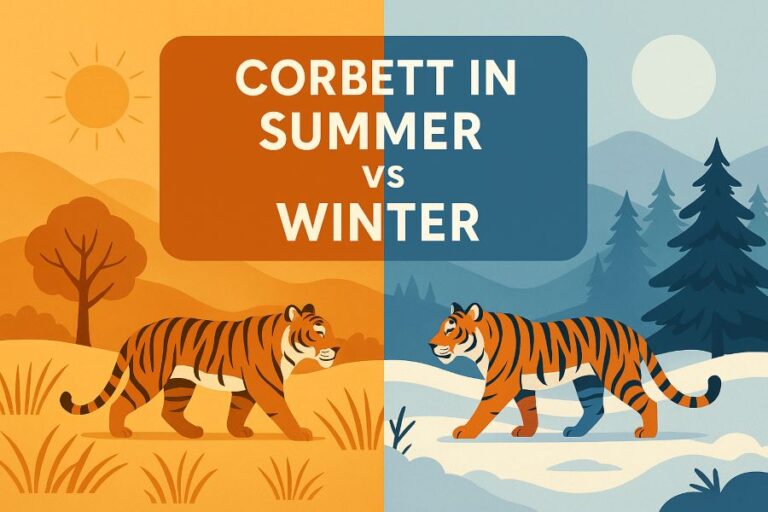
When you compare Corbett in summer and winter, you’re essentially choosing between:
An intense wildlife adventure (Summer)
vs
A comfortable and scenic nature retreat (Winter)
summer brings out the raw, untamed side of the jungle less greenery, more visibility, and higher chances of spotting tigers near water bodies.
On the other hand, winter offers a calm, pleasant environment with misty mornings, lush landscapes, and excellent birdwatching opportunities, making it ideal for relaxed travel.
So, Which Season Should YOU Choose?
That depends entirely on your travel goals:
- Are you chasing the thrill of spotting a tiger in the wild?
- Or looking for a peaceful, comfortable jungle experience with family?
- Do you enjoy photography and wildlife tracking?
- Or do you prefer scenic beauty and pleasant weather?
Your answers will determine whether summer or winter in Jim Corbett is better for you.
You May also want to know – if Monsoon also a Good Time to Visit Jim Corbett National Park?
What You’ll Learn in This Guide
To help you make the right decision, this detailed comparison will cover:
- Weather conditions in both seasons
- Wildlife sightings and safari experience
- Pros and cons of summer vs winter
- Best time for tiger spotting
- Who should visit in which season
By the end of this guide, you’ll have a clear, practical answer not just a generic recommendation.
Jim Corbett in Summer (March to June)
Why Summer is the Best for Wildlife Sightings
Summer in Jim Corbett is raw, intense, and full of life this is when the jungle shows its most dramatic side. As temperatures begin to rise, usually ranging between 35°C to 42°C, the forest slowly shifts from lush green to shades of dry golden grass and dusty trails.
At first, the heat might feel overwhelming, especially during midday. The air becomes warm, and the sun feels strong. But surprisingly, this is also when the jungle becomes more active and easier to understand. Unlike winter or monsoon, when animals are spread across dense vegetation, summer creates conditions that make wildlife more visible and predictable.
As water sources start to dry up, animals naturally move towards rivers, waterholes, and shaded areas. This creates one of the best opportunities to spot wildlife, including deer, elephants, and even the elusive tiger, as they come out in search of water and relief from the heat.
Early morning and evening safaris during summer feel completely different from the afternoon heat. Mornings start with a warm golden sunrise, calm forest sounds, and higher chances of animal movement, while evenings offer a slightly cooler environment with beautiful sunset views across the dry landscape.
So yes, summer in Corbett is hot but it’s also thrilling, raw, and highly rewarding, especially if your goal is to experience the jungle at its most active and untamed.
Summer Pros
- Highest chances of spotting tigers
- Better wildlife photography opportunities
- Less dense forest = clearer views
All major safari zones are open
Summer Cons
- Extreme heat during daytime safaris
- Can feel tiring, especially for families
- Not very scenic (dry landscapes)
Best For
- Wildlife enthusiasts
- Photographers
- Adventure travellers
Jim Corbett in Winter (October to February)
Now would you like to know how you can reach JIM Corbett by road this guide definitely will help you.
What Winter Feels Like in Jim Corbett
Winter in Jim Corbett is calm, refreshing, and visually beautiful making it one of the most comfortable times to explore the jungle. With temperatures usually ranging between 5°C to 25°C, the weather strikes a perfect balance: cool mornings, pleasant afternoons, and slightly chilly evenings.
Mornings in winter often start with a thin layer of mist covering the forest, creating a peaceful and almost magical atmosphere during early safari rides. As the sun rises, the fog slowly clears, revealing lush landscapes, open grasslands, and dense sal forests in their full beauty. This gradual transition from foggy to sunny makes the entire safari experience feel more immersive and scenic.
Unlike summer, where heat can become intense, winter days in Corbett are comfortable and easy to enjoy, allowing you to spend longer hours outdoors without feeling tired. This makes it especially ideal for families, couples, and first-time visitors, who want a relaxed and enjoyable wildlife experience.
Another important aspect of winter is its impact on wildlife. During colder months, animals tend to come out into open areas to bask in the sun, increasing your chances of spotting them during daytime safaris. You’re likely to see herds of deer, elephants grazing in grasslands, and a wide variety of birds, including migratory species that arrive during this season.
Winter is also a great time for photography. The combination of soft sunlight, morning mist, and clear skies creates perfect lighting conditions for capturing both wildlife and landscapes. Every frame feels naturally vibrant without harsh shadows or extreme brightness.
Overall, winter in Corbett feels peaceful, balanced, and refreshing a perfect blend of comfort, scenic beauty, and wildlife activity.
Why Winter is the Most Popular Season in Jim Corbett
If you ask most travellers or wildlife experts about the best time to visit Jim Corbett, the answer is often the same winter. And for good reason. This season offers the most balanced and enjoyable experience, especially for visitors who want a mix of comfortable weather, good wildlife sightings, and overall ease of travel.
One of the biggest reasons winters stands out is the comfortable climate. Unlike the intense heat of summer or the unpredictability of monsoon, winter provides the perfect conditions for exploring the jungle. You can comfortably enjoy both morning and afternoon safaris without feeling exhausted, making your trip more relaxed and memorable.
Another major advantage is wildlife activity during the daytime. In colder months, animals prefer to come out into the open to absorb warmth from the sun. This natural behaviour significantly increases your chances of spotting wildlife without having to rely only on early morning safaris. From deer grazing in open grasslands to elephants moving along forest trails, the jungle feels more alive and visible during the day.
Visibility is also at its best during winter. With low humidity, clear skies, and minimal haze, you get uninterrupted views of the forest landscape. This makes safaris not only more rewarding in terms of sightings but also much better for photography. Whether it’s capturing wildlife or scenic landscapes, winter light is soft, clear, and ideal for photos.
One of the biggest highlights of this season is birdlife. Winter transforms Jim Corbett into a paradise for birdwatchers, as a large number of migratory birds arrive from regions like Central Asia and Europe. You’ll find a rich variety of species near rivers, grasslands, and forest edges making every safari experience even more diverse and exciting.
From a traveller’s point of view, winter also feels more organized and accessible. All safari zones are open, road conditions are stable, and tourism infrastructure operates smoothly. This makes planning your trip easier, especially if you’re visiting with family or for the first time.
Why Travelers Prefer Winter.
- Comfortable weather ideal for long and multiple safaris
- Increased chances of spotting active wildlife during the day
- Clear visibility, perfect for photography and scenic views
- Peak season for birdwatching and migratory birds
- Smooth travel experience with all zones operational
Final Thought:
Winter isn’t just popular it’s the safest and most well-rounded time to experience Jim Corbett. If you want a trip that combines comfort, wildlife, scenery, and overall ease, this season offers everything in the right balance.
Winter Pros
- Pleasant and comfortable climate
- Ideal for families and first-time visitors
- Excellent birdwatching opportunities
- Lush green and scenic landscapes
Winter Cons
- Slightly lower tiger sighting probability compared to summer
- Heavy tourist crowds (peak season)
- Higher hotel and safari prices
Best For
- Families
- Couples & honeymooners
- First-time visitors
- Nature lovers
Summer vs Winter in Corbett – Quick Comparison
| Factor | Summer | Winter |
| Temperature | Hot (35°C–42°C) | Cool (5°C–25°C) |
| Wildlife Sightings | ⭐⭐⭐⭐⭐ (Best for tigers) | ⭐⭐⭐⭐ |
| Comfort Level | Low | High |
| Crowd | Moderate | High |
| Scenery | Dry & golden | Green & fresh |
| Birdwatching | Average | Excellent |
So, which is Better – Summer or Winter in Jim Corbett?
Here’s the honest and practical answer it completely depends on your travel goals.
Jim Corbett is one of those rare destinations where both summer and winter offer incredible but very different experiences. Instead of asking “which season is better?”, the smarter question is:
Which season suits MY travel purpose better?
Let’s make it crystal clear for you.
Choose Summer (March to June) If You Want Raw Wildlife Action
Summer is all about thrill, sightings, and real jungle experience.
As temperatures rise, water sources in the forest shrink. This naturally forces animals especially tigers, elephants, and deer to gather near rivers and waterholes, significantly improving your chances of spotting them.
At the same time, the forest becomes dry and less dense, which further improves visibility during safaris.
Summer is perfect for you if.
- You want the highest probability of tiger sightings
- You are passionate about wildlife photography
- You enjoy adventure over comfort
- You are okay with early morning safaris to avoid heat
- You don’t mind warm weather (up to 40°C+)
Best suited for: Wildlife lovers, photographers, and serious explorers
But Be Prepared for This in Summer.
- Midday heat can be intense and exhausting
- Safaris are best early morning or evening
- The landscape is less green (more dry and golden)
Pro tip: Carry caps, sunglasses, sunscreen, and stay hydrated—it makes a huge difference.
Choose Winter (October to February) If You Want Comfort + Scenery
Winter is all about comfort, freshness, and a relaxed jungle vibe.
The weather remains cool and pleasant, making it perfect for longer safaris and outdoor experiences. Animals are also active during the day because the temperature is comfortable, increasing your chances of spotting a wide range of wildlife.
Plus, winter brings something special migratory birds, making Corbett a paradise for birdwatchers.
Winter is perfect for you if:
- You prefer pleasant weather over extreme conditions
- You are traveling with family, kids, or elders
- You want a relaxed and comfortable safari experience
- You enjoy scenic landscapes and greenery
- You love birdwatching and nature photography
Best suited for: Families, couples, first-time visitors, leisure travellers
Things to Keep in Mind in Winter:
- It’s the peak tourist season, so expect crowds
- Safari bookings fill up fast (advance booking is a must)
- Tiger sightings can still happen, but not as consistently as summer
Pro tip: Book your safari at least 30–45 days in advance for popular zones.
Quick Decision Guide (No Confusion Version)
If you’re still unsure, just follow this.
- Want to see a tiger? → Go in Summer
- Want a comfortable holiday? → Go in Winter
- Want both? → Pick a transition month (Feb–March)
Final Verdict (Simple & Honest)
There is no single “best time” to visit Jim Corbett only the best time for your personal travel style.
For thrill, adventure & wildlife sightings → Summer clearly wins
For comfort, scenery & overall experience → Winter is the winner
Pro Travel Tip (Hidden Sweet Spot Most People Miss)
If you want the best of both worlds, plan your trip in.
Late February to early March
Why?
- Weather is still pleasant (not too cold, not too hot)
- Wildlife activity starts increasing as summer approaches
- Crowds are lower than peak winter months
- Safari experience feels more balanced
This is often considered a “sweet spot” by experienced travellers and wildlife enthusiasts.
Final Advice:
If it’s your first trip → go in winter
If it’s your second trip → go in summer for a deeper wildlife experience.