
Why Packing Smart Can Shape Your Entire Jim Corbett Safari Experience
A safari in Jim Corbett National Park isn’t just another getaway it feels like entering a world where nature sets the rules and time slows down. Every visit reminds me how wonderfully unpredictable the jungle can be. The first time I went, I’ll never forget the surreal moment of waking up before sunrise. The air was crisp, almost sharp, carrying the damp smell of dew settling on sal leaves. Somewhere deep in the forest, a langur let out a frantic warning call, and suddenly every sense came alive. That mix of excitement, alertness, and quiet anticipation—Corbett has a way of making you feel it every single time.
But the jungle is an honest teacher. On that same cold morning, I realized I had underestimated just how chilly a 6 AM safari can be. Wrapped in a light shirt and clutching a coffee that cooled too fast, I shivered my way through most of the drive. And yes my bright red cap invited more curious glances from fellow passengers than from wildlife. That’s when I understood: a safari is not about packing more, it’s about packing right.
Over the years, after multiple visits, many dusty gypsy rides, shared stories with drivers who know every bend of the forest, and advice from naturalists who can interpret every alarm call, I’ve put together a list of simple yet essential packing insights. These aren’t just tips they’re lessons learned from mistakes, conversations, and perhaps a bit of jungle luck.
And now, they’re here to help you.
Whether it’s your first safari or your fifth, this guide will make your Jim Corbett experience more comfortable, respectful toward the wilderness, and truly memorable. From clothing that keeps you warm without disturbing wildlife, to small things people often forget every detail can make a big difference to your overall experience.
Let’s dive in and make sure you pack not just for comfort, but for immersion so the only thing you’ll be thinking about in the forest… is the forest.
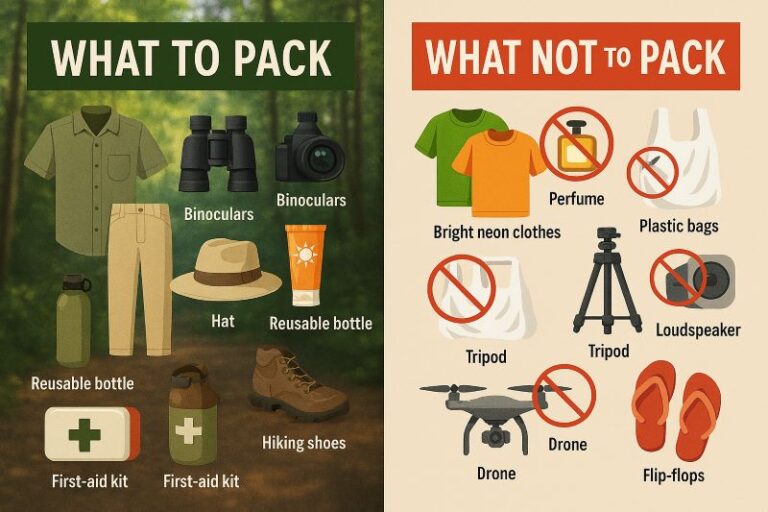
What to Pack for a Jim Corbett Safari
1. Neutral-Coloured Clothing (Non-Negotiable)
Because in the jungle, even your clothes can change your experience.
One of the first lessons you learn in Jim Corbett is that the forest notices everything including what you wear. Wildlife, especially deer, elephants, and birds, are extremely sensitive to movement and color. Bright shades can look unnatural and may distract or alarm them. That’s why wearing neutral, earthy tones isn’t just a suggestion it’s a basic rule of responsible wildlife tourism.
Stick to these colours:
- Olive green – blends beautifully with sal forests.
- Beige – perfect for sunny afternoons and blends with grasslands.
- Khaki – the classic safari colour for a reason.
- Brown – ideal for dry, dusty terrain.
These shades help you merge seamlessly into the surroundings, allowing wildlife to behave naturally often coming closer than you’d expect. I’ve had moments where a curious spotted deer stared right at our jeep or a drongo perched on a branch so close that even my phone camera could capture it. Staying camouflaged really does make a difference.
Ideal Clothing Choices for a Comfortable Safari
A safari day shifts between chilly dawn air, warm late mornings, and dusty trails so your clothes must adapt to all of it.
Recommended clothing:
- Full-sleeve cotton or breathable shirts: These protect you from harsh sunlight, insects, and dust while keeping you cool throughout the ride.
- Lightweight quick-dry trousers: Safari jeeps can get dusty, and occasional splashes happen during river crossings—quick-dry fabrics save you from discomfort.
- A fleece, light jacket, or windcheater: The early morning cold in Corbett can be surprisingly sharp. Even in peak summer months like April, 6 AM safaris often feel chillier than expected.
A Personal Note (Traveler Tip)
On one of my April visits, I confidently stepped into the jeep wearing a light shirt, convinced that summer meant warmth. Five minutes into the forest, a sudden cool breeze blew through the open gypsy, and I spent the next hour wishing I had listened to the driver’s advice about carrying a fleece.
The jungle teaches you quickly: the sun may be hot, but the mornings belong to the cold.
Why Neutral Clothing Truly Matters
- Improves wildlife sightings by reducing visual disturbance
- Helps wildlife photographers get more natural behaviour shots
- Keeps you comfortable during changing temperatures
- Supports responsible tourism by respecting animal sensitivity
- Enhances your own experience by blending you into the moment
Neutral colours don’t just help you “fit in” they help you feel the forest more deeply.
2. Comfortable, Closed-Toe Footwear
Even though you won’t be trekking inside the core forest, the right shoes can make your safari experience drastically smoother and safer.
Many travelers underestimate the importance of footwear on a Jim Corbett trip. Since most of the time is spent sitting in a jeep, people assume anything will do including flip-flops. But in reality, your footwear matters from the moment you step out of your resort. Most stays in Corbett are surrounded by forested trails, uneven walkways, riverbeds, pebbled paths, and tall grass that can hide insects or thorny shrubs. Even climbing up to a watchtower for a better view needs stable grip and protection.
That’s why wearing proper, closed shoes isn’t optional it’s smart, comfortable, and safe.
Best Footwear Choices for a Safari Trip
Choose any of these depending on what you already own.
- Sturdy sneakers: Ideal for resort walks, short nature trails, or quick climbs. They offer good grip and are comfortable for long days outdoors.
- Light hiking shoes: Perfect if you plan additional activities like nature walks, riverside visits, or exploring buffer areas. They’re designed to handle uneven ground and provide support.
- Breathable socks: Don’t ignore socks! Choose moisture‑wicking, breathable ones to keep your feet dry and comfortable especially in warmer months.
These simple choices make your movement around the forest smoother, safer, and dust‑free.
What to Avoid (And Why)
Skip open sandals, slippers, and flip-flops.
Here’s why they’re a bad idea:
- They allow dust, sand, and tiny gravel to enter easily
- You may encounter ants, bugs, or thorny grass, especially in open areas
- Foot support is poor on uneven resort paths or rocky spots
- They’re slippery during early-morning dew or near riverbanks
- Not ideal when climbing watchtowers with metal steps
I’ve seen more than one tourist regretting wearing flip‑flops while trying to climb a high viewpoint or walking back to their room in the dark. Closed shoes save you from unnecessary discomfort.
Traveler Tip (From Experience)
One morning, after a misty safari, I took a short walk behind the resort to a riverside spot. Because the ground was damp and uneven, those wearing open sandals ended up slipping or getting tiny pebbles stuck under their feet every few steps. My lightweight hiking shoes, on the other hand, made the walk effortless and my feet stayed clean and dry.
It’s a small detail, but it truly improves your experience.
Why Smart Footwear Matters
- Better safety on uneven ground
- More comfort during walks or climbs
- Protects from dust, insects, and thorns
- Keeps your feet stable during slippery mornings
- Makes every small safari-related activity easier
Good shoes won’t help you spot a tiger, but they will make sure you enjoy the journey comfortably and confidently.
3. Sunglasses, Hat & Sunscreen
Because even the calmest safari day can leave you sun‑soaked if you’re not prepared.
One thing many travelers don’t expect in Jim Corbett is how strong and direct the sunlight can be, especially once the forest opens into wide grasslands or along the pebbled banks of the Ramganga and Kosi rivers. Whether you’re visiting in winter, summer, or the in‑between months, the open gypsy design means you’re fully exposed to the elements for 3–4 hours at a stretch.
Even on days when the air feels cool, the sun has a way of catching you off guard. I’ve had morning safaris where the early breeze felt refreshing but by 9 AM, the sunlight was reflecting off the sandy riverbeds so intensely that I had to squint even while facing away from it. That’s when you realize sun protection is not optional in Corbett; it’s essential.
Pack These Essentials:
• Polarized Sunglasses
Not just for style these help significantly reduce glare, especially in areas where the sun bounces off water, river stones, or pale grass. Polarized lenses make it easier to spot movement in the distance, whether it’s a fishing kingfisher or a herd of elephants approaching the river.
Travelers tip:
Choose wrap‑around or large‑frame sunglasses to keep dust out during jeep rides.
• A Cap or Wide‑Brimmed Hat
A hat is your first line of defense against direct sunlight. A cap works well, but if you’re sensitive to heat or traveling with children, a wide‑brimmed hat offers better shade for your face, neck, and ears.
Why it’s important.
- Protects from harsh midday sun
- Reduces heat exposure
- Keeps your head cool during open gypsy rides
- Helps avoid sun fatigue
I’ve seen many travelers removing layers thinking the weather is pleasant, only to feel drained by the sun halfway through the safari. A good hat makes a world of difference.
• Sunscreen (SPF 30+ or Higher)
Apply it generously before your safari begins especially on.
- Face
- Neck
- Arms
- Back of hands
The constant wind during jeep rides makes your skin dry faster, and the UV exposure is much higher than in shaded, urban environments.
Choose.
- SPF 30+ or SPF 50
- Sweat‑resistant, non‑fragrant sunscreen
- Cream-based over spray (sprays don’t settle well in dusty conditions)
Reapply if you’re going directly from a morning into an afternoon safari.
Don’t Be Fooled by Winter Weather
Even in December and January, when the air is cool and the mornings are misty, the sun becomes surprisingly sharp by late morning. The open meadows and riverbeds reflect sunlight intensely, and many tourists end up with mild sunburn without even realizing it.
Why Sun Protection Matters on a Safari
- Avoids eye strain from harsh light
- Prevents sunburn during 3–4 hour open jeep rides
- Keeps you comfortable and alert for sightings
- Helps you enjoy landscapes without squinting or discomfort
- Essential for photography good visibility improves your framing
- Reduces fatigue caused by heat exposure
- Camera Gear & Binoculars
Because Corbett isn’t just a tiger destination it’s a treasure chest of wildlife waiting to be noticed.
One of the biggest misconceptions about Jim Corbett is that it’s all about spotting the tiger. While tiger tracking is thrilling, it’s often the unexpected, quieter moments that truly stay with you a herd of elephants enjoying a dusty mud bath, an owl blinking sleepily from a hollow trunk, a hornbill gliding across the canopy, or a vivid kingfisher diving into the river like a blue arrow.
With over 600 species of birds and countless mammals, reptiles, and insects, Corbett rewards those who look closely. And the right gear helps you experience the forest on a deeper, richer level.
4. Essentials to Carry for a Memorable Safari Experience
• DSLR or Mirrorless Camera with a Zoom Lens
If you enjoy photography even a little, Corbett will bring out the photographer in you. Wildlife often maintains distance, and the forest is full of action happening several meters away from birds perched high to animals crossing far-off clearings.
Recommended zoom range: 200–400 mm
This gives you enough reach without needing heavy, complex equipment.
Why it matters:
- Captures faraway animals without disturbing them
- Helps in low-light forest conditions
- Brings out details in birds and fast-moving subjects
- Lets you preserve landscapes, sunrise shots, and candid animal behaviour
Many travelers regret not carrying a proper camera once they see their first elephant herd walking silently out of the grasslands.
• Binoculars (Almost Mandatory for Bird Lovers)
If you enjoy spotting or identifying birds even casually binoculars transform your entire safari. They reveal a world you would never otherwise see:
- A hornbill feeding its chick
- A crested serpent eagle with a kill
- A flock of parakeets swirling across the sky
- A spotted owl peeking from a tree cavity
Ideal specs:
- 8×42 or 10×42
- Waterproof preferred
- Wide field of view for scanning tree lines
Even if you’re not a birder, binoculars make long-distance wildlife sightings much more rewarding.
5. Extra Batteries & Memory Cards
A detail many travelers overlook until the moment they regret it.
Corbett safaris are 3–4 hours long, and the constant zooming, focusing, and burst shots can drain your battery faster than expected. Cold mornings also reduce battery life significantly.
Always pack:
- At least one spare battery
- One additional high-speed memory card
After all, you don’t want to be stuck with a dead camera just when a tiger walks out, or an elephant calf decides to play in the mud.
Rule to Remember: Tripods Are Not Allowed
Tripods including mini tabletop ones are banned inside the safari zones for safety reasons and to avoid disturbing wildlife.
But don’t worry you can still stabilise your shots by.
- Resting elbows on the jeep railing
- Using burst mode to increase clarity
- Leaning against the jeep frame for steadiness
- Using a beanbag if you have one (allowed and helpful)
Why the Right Gear Truly Matters
Carrying the right equipment doesn’t just help you take better photos it enhances how you observe the jungle.
You’ll.
- Notice animals hidden in the foliage
- Catch rare bird moments
- Enjoy distant sightings without frustration
- Stay engaged during quieter stretches of the drive
- Create memories you can relive long after the trip
A safari is not just about seeing wildlife it’s about connecting with it. And having the right gear helps you slow down, observe more, and appreciate the forest’s subtle beauty.
- Personal Medicines & Basic First Aid
Once your jeep enters the forest, you are truly in the wild and that means no shops, no chemists, and absolutely no medical assistance until you exit the gate.
This is one area where travelers often underestimate the importance of preparedness. A safari usually lasts 3 to 4 hours, and once you are deep inside the jungle, your jeep cannot stop for anything other than scheduled points or emergencies approved by the forest guide. Even then, medical help is far away.
That’s why carrying a small, personal medical kit is not just sensible it’s essential.
Carry These Medical Essentials:
• Regular Prescription Medicines
If you’re on any long‑term or daily medication, keep them in your daypack.
The early safari timings, cold mornings, or long travel from your resort may disrupt your routine so it’s safer to have your medicines easily accessible.
Traveler tip:
Keep 1–2 extra doses, just in case.
• Motion Sickness Tablets
Safari jeeps (Gypsies) often take bumpy, uneven tracks filled with:
- sudden turns,
- steep slopes,
- rocky patches,
- And riverbed crossings.
If you’re prone to motion sickness or traveling with children this one small tablet can make your entire experience comfortable instead of queasy.
• Pain Relievers (for Headaches & Body Aches)
Long drives, cold winds, and early morning starts can sometimes trigger:
- mild headaches
- neck stiffness
- body ache
- sinus discomfort
A basic OTC pain reliever helps you enjoy the safari without distraction.
• Band‑Aids & Antiseptic Ointment
Small cuts or blisters can happen during resort walks or when climbing watchtowers. Dusty jungle areas make even minor injuries uncomfortable.
A few Band‑Aids and a small tube of antiseptic cream are more useful than they seem.
• ORS Packets (Especially for Summer Safaris)
Summer temperatures in Corbett can cross 40°C.
Add to that:
- sun exposure,
- continuous wind in open jeeps,
- And walking near riverbeds…
…and dehydration can happen faster than expected.
ORS packets help replenish salts and keep your energy levels stable. Just mix one in a bottle of water after your safari and you’ll feel refreshed immediately.
Why This Matters for Your Safari Experience
A small medical kit ensures you:
- stay comfortable throughout the safari
- avoid unnecessary stops or interruptions
- feel more confident when traveling with kids or elders
- handle small issues instantly
- prevent minor discomfort from becoming major problems
A safari is meant to be about enjoying the forest, not worrying about headaches, dizziness, motion sickness, or thirst.
6. Insect Repellent
While Corbett isn’t overly mosquito-heavy, dawn and dusk can bring small biting insects.
Prefer:
- Cream-based or roll-on repellents
Avoid strong, scented sprays that attract more bugs and can disturb wildlife.
7. Reusable Water Bottle
Safari jeeps usually don’t stop inside the forest, so hydration is key.
Carry:
- A refillable, eco-friendly bottle
Corbett encourages minimizing plastic so do the forests, silently.
8. Essential Documents & Cash
Keep these handy:
- Government ID (mandatory)
- Safari permit (save screenshots too)
- Some cash mobile networks are unpredictable inside and around the forest
What NOT to Pack for a Jim Corbett Safari
1. Bright or Flashy Clothing
When you’re in a wildlife habitat like Jim Corbett, your clothing shouldn’t stand out it should blend into the forest. Bright, flashy, or reflective colours create strong visual contrast against the natural landscape, which can startle, distract, or disturb wildlife, especially sensitive species like deer, birds, and smaller mammals.
Here are the colours you should strictly avoid, and the reason behind it:
- Red – Looks unnatural in the forest and draws immediate attention from animals.
- Yellow – Highly reflective under sunlight and visible from a long distance.
- Neon shades – Extremely bright; these can cause birds to flee and alert shy animals.
- White – Stands out sharply against the earth-toned environment and becomes glaring in daylight.
- Loud prints or patterns – Distract animals and can interfere with natural wildlife behaviour, especially during photography.
Why avoiding these colours is important:
- Animals may change their behaviour or move away from you
- Bright colours can reduce the chance of close or calm wildlife sightings
- Birds, especially raptors and ground dwellers, are easily alarmed
- Photographs look less natural and may ruin group pictures
- Guides often advise neutral clothing to maintain forest etiquette
In short, blending in helps you see more, experience more, and disturb less and that’s what a responsible safari is all about.
2. Perfumes & Strong Deodorants
Strong scents:
- Attract insects
- Spread heavily inside the jeep
- Distract animals
Stick to mild or fragrance-free options.
3. Plastic Bags & Litter Items
Corbett takes cleanliness seriously and so should every visitor.
Do NOT carry:
- Plastic bags
- Foil wrappers
- Disposable packaging
Always follow a leave-no-trace approach.
4. Loud Gadgets & Music Players
Safari etiquette 101:
- No Bluetooth speakers
- No loud ringtones
- No music
Let the forest soundtrack bird calls, rustling leaves, flowing rivers take over.
5. Drones, Tripods & Heavy Equipment
These require special permissions and are generally prohibited. Don’t bring them unless explicitly allowed.
6. Unnecessary Valuables
The roads are dusty, the rides are bumpy, and the forest is unpredictable.
Leave behind:
- Expensive jewellery
- Extra electronics
- Delicate items
Keep your backpack simple and functional.
Final Thoughts: Pack Smart, Safari Better
A Jim Corbett safari is not just about what you wear or what you bring it’s about how deeply you allow yourself to experience the forest. The jungle has its own rhythm, far slower and gentler than the busy world we come from. And when you pack thoughtfully, travel lightly, and respect the wilderness, you naturally slip into that rhythm.
Blending into the forest with the right colours, keeping noise minimal, and carrying only what you truly need does more than make you a responsible traveler it transforms the entire safari. Suddenly, the forest feels closer. More alive. More generous.
When you’re not distracted by discomfort or clutter, you begin to notice things you would otherwise miss:
You hear more — the rustle of leaves, the distant alarm call, and the soft hum of cicadas.
You see more — a hornbill gliding overhead, a deer studying you from behind a bush, a tiger pugmark on the track.
You appreciate more — the golden morning light, the earthy smell after a breeze, the stillness that only a forest can offer.
Packing smart isn’t about being perfect it’s about being prepared enough to let the jungle take over your senses.
When you respect the forest, the forest rewards you.
When you slow down, nature speeds up for you.
And when you come with the right mindset, Jim Corbett becomes more than a trip it becomes a memory you’ll never forget.






